Indonesian tech creator skills: 72.8% internet user share
"The digital landscape in Southeast Asia is no longer a peripheral frontier but a central hub for content creation and technical discourse."
Indonesian tech creators build their professional authority upon a foundation of expanding digital access and formalized technical education. This expertise is driven by high internet penetration and the adoption of international software engineering standards in local universities.
Key takeaways include the impact of a 72.8% internet user share, the role of standardized curricula, and the evolution of digital learning facilities.
How does internet access shape Indonesian tech creator skills?
A young man in Jakarta adjusts his ring light while checking the connection on his high-speed router. The glow of the monitor reflects the widespread connectivity that allows creators to reach massive audiences.
The digital environment provides the necessary reach for Indonesian tech creator skills to flourish. According to World Bank data, Indonesia recorded share of internet users of 72.8% in 2024.
This high level of connectivity ensures that technical reviews and tutorials find a ready audience across the archipelago.
The growth of digital skill formation follows this trend of increased connectivity. As more citizens come online, the demand for localized technical content rises. This creates a feedback loop where creators use their platforms to teach others about the tools they use.
However, the quality of skill development remains limited in regions with unstable or low-bandwidth connectivity.
How do I navigate my IT education growth path?
A student sits in a quiet library, scrolling through a digital textbook on a sleek laptop. The atmosphere is one of intense focus on mastering complex coding languages.
The IT education growth path in the region is bolstered by structured academic environments. Universities have transitioned from traditional classrooms to hybrid models to keep pace with technological shifts.
This evolution allows students to gain the technical depth required to become credible reviewers.
Digital competency study suggests that formal training provides the theoretical backbone for practical content creation. When creators understand the underlying architecture of the devices they review, their commentary carries more weight.
This academic rigor separates hobbyists from professional industry commentators.
However, theoretical knowledge alone may not suffice without practical application in real-world environments.
According to World Bank, the 2024 record includes 72.8%.
Do software engineering standards affect tech reviewers?
An instructor points to a complex diagram of software architecture on a large digital whiteboard. The classroom is filled with the soft clicking of keyboards as students take notes.
A tech reviewer background is often rooted in the standardized frameworks taught in higher education.
For example, a standard international curriculum for undergraduate software engineering degrees was defined by the Joint Task Force on Computing Curricula of the IEEE Computer Society and the Association for Computing Machinery, and updated in 2014.
Following these global standards ensures that Indonesian students are learning the same principles used in Silicon Valley. This alignment means that a creator's critique of a new operating system or software update is grounded in recognized engineering principles.

Such knowledge is vital for maintaining professional credibility.
However, these standards may not apply to reviewers focusing solely on consumer-level hardware usability rather than technical architecture.
##
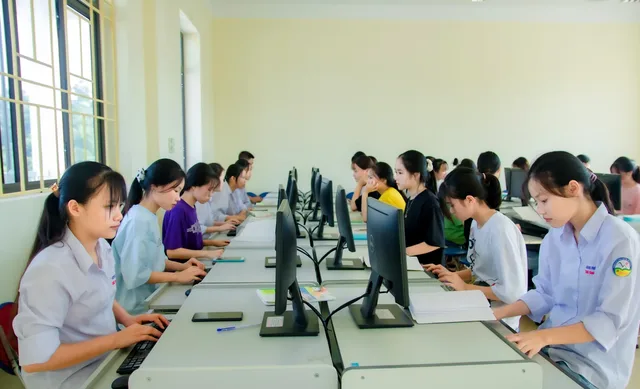
A technician walks through the modern hallways of a campus in Bekasi, carrying a stack of tablets. The sunlight streams through large windows, illuminating a space designed for high-tech interaction.
The evolution of digital skill formation was notably influenced by the expansion of specialized learning facilities.
I observed how these digital-first approaches allowed students to bridge the gap between theory and the rapidly changing tech market. By utilizing online learning communities, students could engage with technical topics in real-time. This flexibility is a cornerstone of modern technical expertise.
However, the effectiveness of these programs depends heavily on the individual student's proactive engagement with the curriculum.
Is there a connection between software engineering and professional licensing?
A legal scholar reviews a thick volume of professional standards in a dimly lit study. The weight of the book emphasizes the gravity of professional accountability in technical fields.
The development of tech expertise is sometimes complicated by debates over professional status.
The ACM and the IEEE Computer Society together examined the possibility of licensing of software engineers as Professional Engineers in the 1990s, but eventually decided that such licensing was inappropriate for the professional industrial practice of software engineering.
This decision means that expertise in the tech creator space is measured by demonstrated skill and peer recognition rather than a government license. Consequently, the authority of a creator rests on their ability to communicate complex technical truths accurately.
However, the necessity of licensing varies depending on whether the work is performed in a regulated corporate environment or as a freelance developer.
What are the steps to master technical content creation?
A creator organizes a desk filled with various smartphones, cameras, and microphones. The process requires careful planning and a systematic approach to testing new hardware.
To build a professional foundation, one should follow these steps:
- Complete a formal curriculum in computer science or software engineering to understand hardware and software interactions. 2. Utilize online learning communities to stay updated on the latest industry trends and software updates. 3. Apply theoretical knowledge to practical product testing to ensure reviews are based on technical specifications.
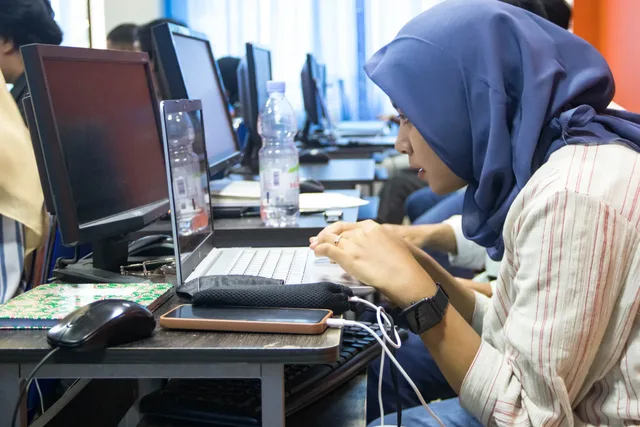
I found that comparing these steps helps in maintaining a consistent level of quality in every video produced. After completing the third step, always perform a final check to ensure all technical claims align with the observed data.
The scope of this study is limited to the educational and connectivity foundations of tech creators and does not extend to the specific economic motivations of the content industry.
- Develop a deep understanding of the core technical subject matter.
- Learn to translate complex concepts into accessible language.
- Practice delivering information through various digital media formats.
The same subject is also called Computer science impact.
This part also covers IT school influence on vloggers.
This part also covers Developing tech expertise.
IT school influence on vloggers
Related





Comments 0